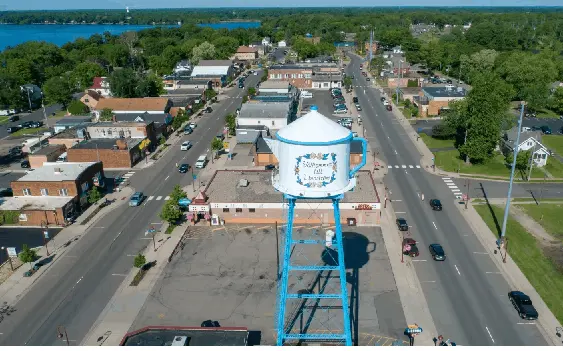

Forest Lake MN Property Taxes: What Home Buyers Need to Know
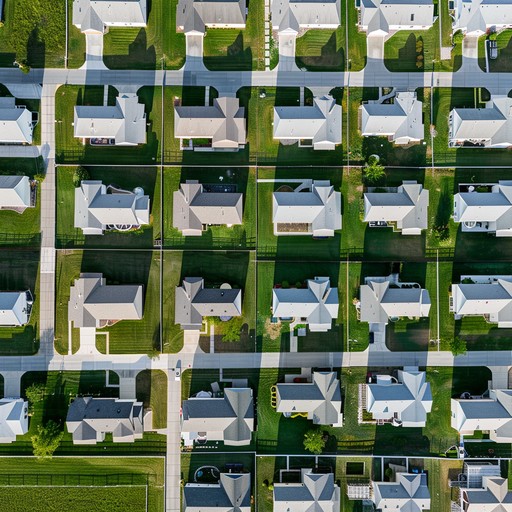
Forest Lake MN Property Taxes: What Home Buyers Need to Know
If you are shopping for a home in Forest Lake, one question comes up in almost every buyer consultation I run. Why does this house have a lower tax bill than the one down the street that looks nearly identical? It is a fair question, and the honest answer is that Minnesota property taxes are more complicated than a simple percentage of price. This guide breaks down exactly how property taxes work in Forest Lake and Washington County, why two similar homes can carry different bills, and what buyers of lake property, new construction, and resale homes need to check before they write an offer.
How property taxes actually work in Minnesota
Minnesota does not use a single flat property tax rate. Instead, each taxing jurisdiction, meaning the county, the city, the school district, and a handful of smaller entities like the watershed district and Metropolitan Council, decides how much money it needs for the year. That total is called the levy. The levy is then divided by the total taxable value of every property in that jurisdiction, which produces the tax rate for that area. Your home's share of the levy is based on your property's taxable market value multiplied by a class rate, since different property types, such as a residential homestead versus a cabin or rental, are taxed at different rates.
Here is the timeline that matters most for buyers. The assessor sets your property's estimated market value as of January 2 each year. That valuation becomes the basis for taxes paid the following year. Washington County mails a Valuation Notice each March showing next year's assessed value, and a separate Property Tax Statement by March 31 covering the current year's bill. In mid November, the county sends the Truth in Taxation notice, which shows the proposed tax for the coming year based on preliminary budgets from each taxing authority. Because of this lag, the tax amount you see on a listing today reflects a valuation that is already twelve to eighteen months old, and it will very likely change once you close and the home is reassessed.
Why two similar homes can have very different tax bills
This is the part that trips up almost every buyer, and it is worth understanding before you compare listings side by side. A few factors explain the gap even when two houses look the same from the curb.
Homestead classification. A house someone lives in full time as their primary residence qualifies for homestead status, which reduces the taxable value and often qualifies the owner for the state's Homestead Market Value Exclusion. A non homestead property, such as a rental, a second home, or a home still titled to an estate, does not get that benefit and will show a noticeably higher bill on paper.
Purchase timing and reassessment. If a seller has owned a home for ten years, the assessed value on record may be well below current market value. Once you buy the home, the county will eventually reassess it closer to your purchase price, and your future tax bill will likely rise from what the seller was paying. This is one of the most common surprises for first time buyers in Forest Lake, especially on homes that have appreciated significantly.
Improvements and permits. Finished basements, additional garages, decks, and other permitted improvements add value that shows up in future assessments. A home with an unpermitted addition may be underassessed today, which is a liability, not a benefit, once the county catches up.
Special assessments. These are added charges for specific public improvements, such as a new street, sewer line, or watershed project, and they sit on top of your regular tax bill until paid off. One home may be carrying an active assessment while its twin across the street already paid its balance off.
Location within overlapping districts. Watershed districts, fire districts, and school district boundaries do not always follow city lines. Two homes a few blocks apart in Forest Lake, Scandia, or Wyoming Township can fall into different combinations of taxing authorities and end up with different effective rates.
Understanding homestead status
Homestead classification is the single biggest lever most owner occupants have to lower their tax bill, and it costs nothing to claim. In Minnesota, once you close on a home you intend to occupy as your primary residence, you file a homestead application with the county assessor, generally by December 31 of the year you move in, to have it apply to the following year's taxes. Washington County's Assessor's Office handles this at 651 430 6175.
The benefit comes through the state's Homestead Market Value Exclusion. For homes valued at 95,000 dollars or less, 40 percent of the value is excluded from taxation, which is the maximum benefit. As home value rises, the dollar amount of the exclusion shrinks, and it phases out completely for homes valued at 517,200 dollars or more. Since most Forest Lake area homes, and nearly all lakefront properties, sit well above that threshold, buyers of higher value homes should not expect a large dollar reduction from homestead status alone, but it remains worth filing because it is also a prerequisite for several state property tax refund programs.
If a home is only partially owner occupied, for example one owner lives there and a co owner does not, the exclusion is reduced proportionally.
Assessments and how the county sets your value
Each year, Washington County reviews recent home sales in your area, generally sales that closed between October 1 and September 30 of the prior year, and uses that data to set market values for the following assessment. State law also requires the assessor to physically review each property at least once every five years to confirm the details on file are accurate. If you disagree with your assessed value after buying, you have the right to appeal. Start by calling the Assessor's Office to discuss it informally, and if that does not resolve it, you can pursue a formal appeal through the county board of appeal and equalization process. Buyers should know this process exists, but it generally cannot be used to challenge the current owner's tax bill before closing, only your own bill going forward.
Special assessments explained
Special assessments are separate from your regular annual property tax and fund specific local improvements that benefit your property directly, such as street reconstruction, new sewer or water lines, sidewalks, or watershed and lake improvement projects. Unlike your general tax levy, a special assessment is tied to a defined project cost and has a set payoff schedule, often spread over ten to twenty years with interest. It shows up as its own line item on your property tax statement until it is paid in full or paid off early.
This matters enormously at the negotiating table. Before you write an offer, ask your agent to pull the special assessment search for the property through Washington County. You want to know three things: whether there is an active assessment balance, how many years remain, and whether the seller is expected to pay it off at closing or whether it transfers to you as the buyer. On lakefront and newer development properties in particular, unpaid assessments tied to road or utility improvements can add a meaningful ongoing cost that is easy to miss if you are only looking at the advertised tax figure on the listing sheet.
New construction and property taxes
Buyers of new construction homes in Forest Lake, Scandia, Wyoming, and Hugo need to plan for a very specific pattern. When a home is under construction, the assessor often only has land value or a partially complete structure on record as of the prior January 2 assessment date, so the first year's tax bill can look artificially low. Once the home is finished and reassessed, the taxable value jumps to reflect the completed structure, and the tax bill typically rises substantially in year two or three. I walk every new construction buyer through a projected, stabilized tax number rather than letting them anchor to the builder's estimated first year figure, because that number is almost never what you will pay long term.
New construction can also carry its own special assessments tied to the development, covering the original installation of roads, sewer, and water infrastructure for the subdivision. Ask specifically whether those assessments are already paid off by the developer or whether they are being passed through to homeowners.
Lakefront properties and property taxes
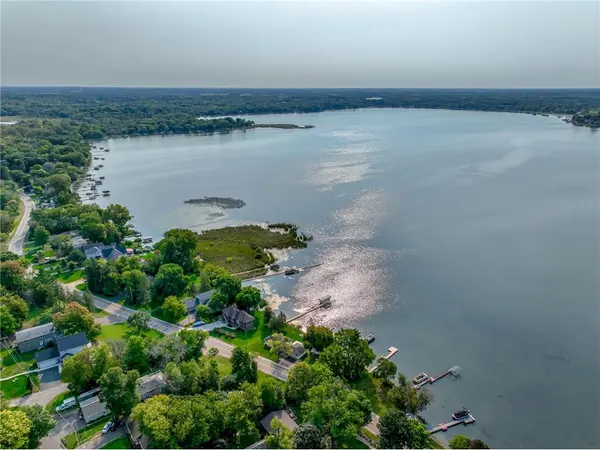
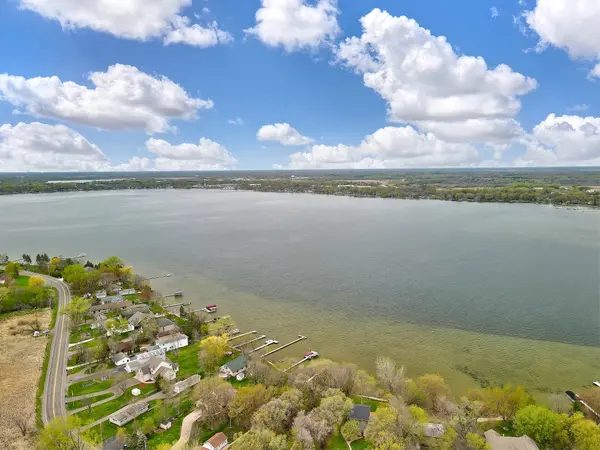
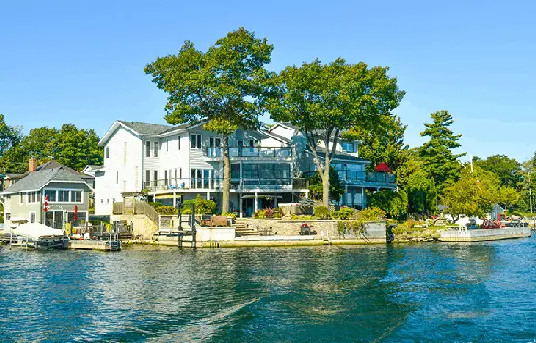
Lakefront and lake access properties in the Forest Lake chain, the greater Chisago Lakes Chain, and the St Croix Valley carry some of the highest assessed values in the area, and taxes scale accordingly. A few things are unique to shoreline property. Riparian and frontage characteristics, meaning lot width on the water, water depth, and sun exposure, directly influence the assessor's valuation, so two lake homes with similar square footage can have very different tax bills based on the quality of the shoreline alone. Because homestead exclusion phases out entirely above 517,200 dollars in value, and most quality lakefront homes exceed that threshold, buyers should not expect the exclusion to meaningfully offset the tax bill on a lake property the way it might on an entry level home. Watershed district charges also commonly apply to shoreline parcels and appear as a separate line on the tax statement, funding water quality and drainage projects specific to that lake system. If you are buying a lake lot to build on, budget for the same new construction reassessment jump described above, since raw land is taxed far differently than a completed lake home.
Where to verify current taxes before you buy
Never rely solely on the tax figure printed on a listing sheet, since it reflects last year's bill under the seller's ownership and homestead status, not what you will actually pay. Before writing an offer, verify current and historical tax data directly through Washington County's Property Records and Taxpayer Services Department, either online through the county's property information search using the parcel ID or address, or by calling the Assessor's Office at 651 430 6175 for valuation questions or the Taxpayer Services line for special assessment payoff amounts. I pull this information for every buyer I represent as part of our offer preparation, including confirming homestead status, any active special assessments, and a realistic projection of what the tax bill will look like once the property is reassessed under new ownership.
If you are actively looking at homes in Forest Lake, Lindstrom, Chisago City, Scandia, Wyoming, or Hugo and want a straight answer on what a specific property will actually cost you in taxes long term, reach out and I will walk through the numbers with you before you write an offer.
Clint Abel | REAL Broker LLC | 612 812 9808 | Clint@ClintAbel.com | Website
Categories
Recent Posts